
The 1979 war between Vietnam and China
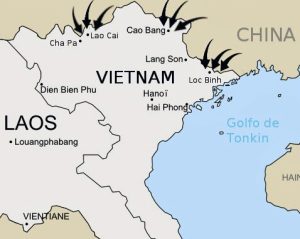
The Sino-Vietnamese War (also known by other names) was a brief conflict that occurred in early 1979 between China and Vietnam. China launched an offensive ostensibly in response to Vietnam’s invasion and occupation of Cambodia in 1978, which ended the rule of the Khmer Rouge. The conflict lasted for about a month, with China withdrawing its troops in March 1979.
In February 1979, Chinese forces launched a surprise invasion of northern Vietnam and quickly captured several cities near the border. On 6 March of that year, China declared that its punitive mission had been accomplished. Chinese troops then withdrew from Vietnam. Vietnam continued to occupy Cambodia until 1989, suggesting that China failed to achieve one of its stated aims of dissuading Vietnam from involvement in Cambodia. China’s operation at least forced Vietnam to withdraw the 2nd Corps from the invasion forces of Cambodia to reinforce the defense of Hanoi.[14] Additionally, it demonstrated that the Soviet Union, China’s Cold War communist adversary, was unable to protect its Vietnamese ally.[15] The conflict had a lasting impact on the relationship between China and Vietnam, and diplomatic relations between the two countries were not fully restored until 1991, following the withdrawal of Vietnamese troops from Cambodia and the dissolution of the Soviet Union. The Sino-Vietnamese land border was formally agreed upon in 1999.
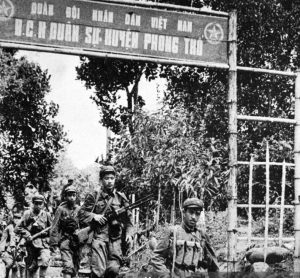
The Sino-Vietnamese War is known by various names in Chinese and Vietnamese. The neutral names for the war are (Sino-Vietnamese war) in Chinese and “Chiến tranh biên giới Việt-Trung” (Vietnamese-Chinese border war) in Vietnamese. The Chinese government refers to the war as the “China-Vietnam border self-defense counterattack operations” or the “Self-defensive counterattack operations against Vietnam to protect the border.” Chinese non-official sources generally use a shorter form, “Self-defensive counterattack against Vietnam.” The Vietnamese government calls it the “War against Chinese expansionism” (Chiến tranh chống bành trướng Trung Hoa),[20] while a party-aligned newspaper calls it the “Northern Border Defense War”.
The Sino-Vietnamese War is also known as the Third Indochina War in Western historiography.
Just as the First Indochina War, which emerged from the complex situation following World War II, and the Vietnam War arose from the indecisive aftermath of political relations, the Third Indochina War again followed the unresolved problems of the earlier wars.
The victors of World War II, the United Kingdom, the United States, and the Soviet Union, all agreed that the area belonged to the French. As the French did not have the means to immediately retake Indochina, the major powers agreed that the British would take control, and troops would occupy the south while Nationalist Chinese forces would move in from the north. Nationalist Chinese troops entered the country to disarm Japanese troops north of the 16th parallel on 14 September 1945.
Leave a Reply