
Chapter 2 America Enters the Conflict
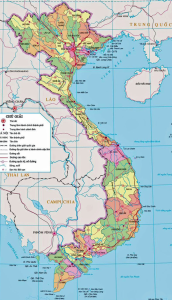 Expanded American involvement in Vietnam did not begin with a single dramatic decision, but with a slow, calculated accumulation of commitments rooted in Cold War anxieties. By the mid-1950s, Washington viewed nearly every international conflict through the lens of the Domino Theory, the belief that if one nation fell to communism, its neighbors would inevitably follow, spreading Soviet or Chinese influence across entire regions. Southeast Asia, with its strategic location and political instability, was seen as a critical line of defense.
When France withdrew after its defeat at Dien Bien Phu in 1954, the United States faced a choice: allow Vietnam to unify under communist leader Ho Chi Minh or support the fledgling anti-communist government in the South. America chose the latter, providing a rising flow of money, equipment, and advisors. What began as political support evolved into a deeper military partnership. Throughout the early 1960s, U.S. advisors found themselves drawn into combat despite their “non-combatant” designation. Reports from the field painted a troubling picture.
South Vietnamese forces were struggling against the Viet Cong insurgency, corruption was rampant within the South Vietnamese government, and rural populations often sympathized more with local communist cadres than with distant leaders in Saigon.
The turning point came with the Gulf of Tonkin Incident in August 1964. Following reports (some later questioned) that North Vietnamese patrol boats had attacked U.S. naval vessels, President Lyndon B. Johnson obtained sweeping authority from Congress to take “all necessary measures” to protect American forces and assist South Vietnam. This effectively opened the door to full-scale war. At its peak, more than 500,000 American troops were deployed to Vietnam.
A War Unlike Any Before Vietnam was a conflict of contrasts: Dense jungles, guerrilla tactics, and tunnels replaced traditional battlefields. Advanced American technology clashed with the resourceful Viet Cong and North Vietnamese Army. Military victories didn’t easily translate into political progress. For many U.S. soldiers, the war felt disorienting, an enemy who could appear and disappear in the jungle, villages where friend and foe were hard to distinguish, and battles that rarely resulted in clear strategic gain.
War at Home: A Nation Divided
Perhaps more than any other modern war, Vietnam unfolded in Americans’ living rooms, broadcast nightly on television. Graphic images and rising U.S. casualties fueled a growing antiwar movement.
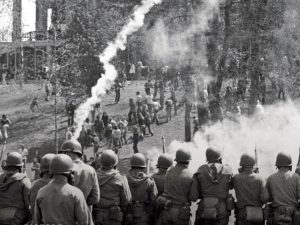 Protests erupted across the country: College campuses held massive demonstrations. Veterans returned home to a divided public, some facing indifference or hostility. Music, art, and literature of the era reflected the turmoil. The conflict sparked debates about government transparency, patriotism, and morality, conversations that continue today.
The End of the War By the early 1970s, U.S. public support had eroded. A gradual withdrawal began under the policy of “Vietnamization”, which aimed to shift combat responsibilities to South Vietnamese forces.
In 1973, the U.S. formally ended its direct involvement. Two years later, North Vietnamese forces captured Saigon, reunifying Vietnam under communist rule.
Leave a Reply